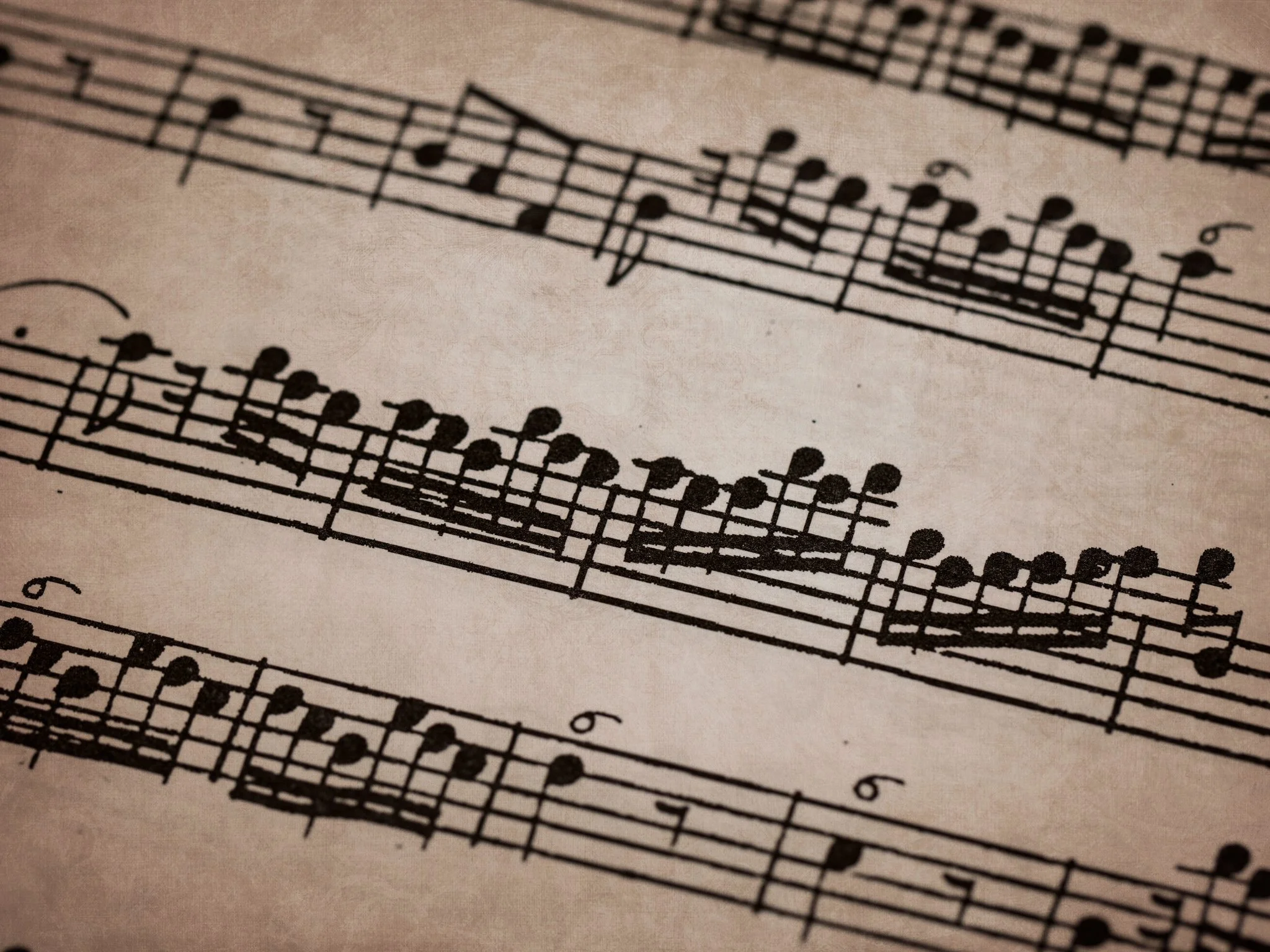
Sounding pipes – musical explorations

What do you listen to most when you’re travelling? When I’m on the road I’m an avid listener of podcasts, but when I begin to flag music becomes my preferred choice. There’s nothing quite like singing along loudly to a piece of music to wake you up and make the miles pass more quickly!

On recent journeys I’ve taken to putting the choice of music in the hands of Apple Music (other music providers are available!), telling the app on my phone to pick the music for me. I’ve always enjoyed a very varied listening diet – one day it’ll be Bach, followed maybe by a Brahms Symphony, some Byrd polyphony or popular music by the Beatles or Robbie Williams. The app on my phone has been learning from this and when I put it in charge it offers me an equally eclectic mix. This has proved to be a wonderful ground for discovering fresh music.

I’ve made some amazing discoveries during these listening sessions and it struck me you might be interested in some of the gems I’ve come across. The result is a new series of occasional blog posts called Sounding Pipes, where I’ll share some of the (mostly) recorder related recordings I’ve encountered and enjoyed. Of course, those long journeys in the car are only the beginning. Sometimes I’ll seek out a piece of music again once I’m home, taking me down unforeseen paths to other fascinating repertoire, or reminding me of works I’d forgotten about.

I hope you enjoy these listening suggestions and that perhaps they lead you to new discoveries of your own. All of this week’s pieces are available on YouTube to watch or listen to, but wherever possible I’ll also include details of the albums they come from so you can explore further if you wish.

Happy listening!

J.S.Bach – Ebarme dich, mein Gott from the St. Matthew Passion

Lucie Horsch – Baroque Journey (Decca 2019)

This is where the inspiration for this series originated, as this piece popped up on my playlist, performed by Dutch recorder player Lucie Horsch. I first encountered this heart breakingly beautiful aria when I performed in a St. Matthew Passion on the Isle of Wight many years ago. I clearly recall the exquisite combination of solo violin and countertenor voice and it remains my absolute favourite from the most famous of Bach’s Passions. Purists may not approve of the way Lucie Horsch swaps the vocal line for a recorder, but it’s hard not to forgive this change when she plays it so beautifully.

Following the breadcrumbs laid by Lucie, I returned to Bach’s original scoring and made a second, even more amazing discovery. Searching on YouTube, I happened upon the Netherlands Baroque Society’s project, All of Bach. This project aims to perform and record the entirety of Bach’s compositional output, making it all available to watch free of charge – an astonishing prospect in every way! Among the pieces already recorded is a performance of the St. Matthew Passion from 2015. The whole Passion is available online, but the performance of Ebarme dich, mein Gott, featuring violinist Shunske Sato and singer Tim Mead is, to my mind, even more glorious than Lucie’s one. While there are no recorders in the original, I decided to share this with you too as I hope you’ll love it as much as I do!

Alfonso Ferrabosco the younger – Pavan No.2 on Seven Notes

B-Five Recorder Consort & Sofie Vanden Eynde (lute) – The Soule of Heaven (Coviello Classics COV92108)

I have to credit my Dad for pointing me in the direction of this particular recording. He heard this Pavan by Ferrabosco on the radio recently and asked if I knew it. While I was certainly familiar with Ferrabosco I didn’t know this particular Pavan and what a find it is! The B-Five Recorder Consort play it on a wonderful set of low Renaissance recorders and the lush tones are so enchanting. The addition of lute (played by Sofie Vanden Eynde) enhances the texture, balancing the richness of the recorder tone. Needless to say I’ve downloaded the whole album and it’ll be a welcome soothing influence after a busy day!

Sour Cream performing a selection of music for three recorders

Frans Brüggen, Kees Boeke & Walter van Hauwe

I discovered this video while rummaging on YouTube for recorder trio music. My eye was caught by the inclusion of Upon Ut Re Mi Fa by John Baldwine, but this 36 minute programme contains an eclectic mix. When this was recorded in 1981 at the Sainsbury Centre for Visual Arts in Norwich, the centre had been open for just three years, designed by the then largely unknown architect Norman Foster. The building is home to an enormous art collection, spanning some 5000 years of human activity, and the music reflects this variety.

Sour Cream was formed by Frans Brüggen, Kees Boeke & Walter van Hauwe with the intention of commissioning and performing avant garde music recorder music, but their repertoire expanded way beyond that. Rather than being a straight performance to camera, the trio’s music is accompanied by an eclectic cinematic approach, using green screen techniques and even a surreal Monty Pythonesque section where they interact with the works of art and then fall asleep. I can’t but feel they had great fun making this! The music may not all be to your taste, but there’s bound to be something you’ll love. The final Bach Allegro (the Preludio from his Violin Partita in E minor) is an absolute tour de force of technique and precision.

If this quirky compilation intrigues you I suggest you explore Sour Cream’s iconic album The Passion of Reason (recorded in 1993/4 & rereleased by Glossa records 2013) which includes an equally varied repertoire from five centuries.

Incidentally, if you’re interested in hearing the original violin version of the Bach Preludio which ends this selection, I can recommend this performance by Viktoria Mullova. If you fancy the ultimate workout, Frans Brüggen also made his own transcription of the Preludio for solo recorder which is published by Moeck, along with a selection of other movements from the Violin Partitas. If you choose to try it for yourself be prepared to do lots of scale and breathing practice!


Telemann Concerto in E minor for recorder and flute

Frans Brüggen (recorder), Frans Vester (flute) & Concertgebouw Chamber Orchestra

When I was at music college I regularly used to visit Leadenhall Market in the city of London to browse the CDs at Farringdon Records (a wonderful shop which sadly no longer exists). It was on one such visit that I discovered this recording and it became a firm favourite. The playing style may not be as ‘authentic’ as some (played on modern instruments rather than Baroque copies) but I was blown away by the sheer energy of the performance. To this day the vivacity of the final movement of the concerto is simply irresistible

If this recording appeals to you as much as it did to my youthful self I recommend exploring the whole album which features four other concertos and overtures by Telemann.


New Zealand Traditional - Wellerman

Ralf Bienioschek - recorders, guitar, percussion, melodica

And now, as they say, for something completely different! Early in 2021 a new craze emerged on TikTok and other social media sites, spurred by Scottish singer Nathan Evans’ performances of sea shanties. Perhaps the best known of these is Soon May the Wellerman Come, and it wasn’t long before the recorder world had its own version. One of my subscribers, pointed me to this performance by Ralf Bienioschek and it’s absolutely infectious in its drive and energy. He’s recorded several other multitrack videos of equally unlikely repertoire for recorder (Billy Eilish’s Bad Guy for instance) and there are links to these on Ralf’s website. A big thank you to Jean for leading me here and many apologies if this results in a persistent earworm!

If this whets your appetite to play Wellerman for yourself Ralf has published the sheet music for his arrangement here.

So there you have my first Sounding Pipes playlist - I hope you found something new and enjoyable within. If you have favourite recordings you’d like to share with us all please do leave a comment below - I hope this may offer an opportunity for us all to explore and listen further!


Pitch Perfect - the journey to musical consensus

Pitch can be a nebulous concept, even in music, where you might imagine it would need the strongest of foundations. Today we take it for granted that the A an oboist plays for an orchestra to tune up is a definitive, fixed pitch, but it wasn’t always so. And where does that leave us as recorder players, when we habitually play music from many centuries? Today I’m going to talk about the concept of pitch and how it relates to your musical work in a practical way.

A brief history of pitch

Let’s begin with the basics – how pitch is measured. With an oscilloscope it’s easy to see that sound (musical or otherwise) is made up of different shaped waves. The shape of the sound waves from a recorder are fairly smooth and simple, thanks to our instrument’s pure tone. In comparison, an instrument like the clarinet produces a much more jagged shape when played into an oscilloscope. The speed of these waves is measured in Hertz (Hz), with the number referring to the number of times the waves occur per second. As pitch rises, the number of vibrations per second increases. For instance, the lowest note played by a contrabassoon (a B flat three octaves and one note below middle C) sounds at just 29Hz, while the A given by an orchestral oboist is 440Hz. When it comes to defining the pitch of any instrument it’s the frequency of the A above middle C (the one the oboist gives) which is used – for instance A440 has been the standard pitch for many decades.

Standardisation of pitch

While we’re used to the idea of a universal pitch today, this is a relatively recent concept. Centuries ago, when musicians didn’t travel very far, the ‘standard’ pitch in any village or town tended to be that played by the church organ. Such instruments cannot be easily retuned, so any other musician just had to conform to whatever pitch it was tuned to!

Six months after the death of King Henry VIII an inventory was made of his possessions, revealing that he owned no fewer than 76 recorders. He was reputedly an able musician but even Henry VIII couldn’t play more than one recorder at a time. But having a set of instruments made at the same pitch meant he could play with musicians who lived elsewhere. There was no guarantee the instruments of a musician living even just a few miles from the Royal palace would be at the same pitch, so having a set of matching recorders would solve this problem.

As musicians travelled more, the need for a standardised pitch became more urgent, although it took several centuries before pitch became consistent around the globe. I always compare this process to the introduction of railway time. In the 18th century each town would set its time according to the local sundial - this meant that time varied according to the location within the country. With the advent of long distance travel it became necessary to standardise time, so railway timetables could be devised and run accurately. Musical pitch had to ultimately follow a similar process so musicians from different places could play together at the same pitch.

Geographical variations

In 1711 the tuning fork was invented by trumpeter John Shore. Many historic tuning forks still remain today and these pieces of metal give us a fascinating glimpse into geographical variations of pitch.

In 1880 Alexander Ellis wrote an essay about the history of musical pitch for the Society of Arts in London. In it he talks about dozens of tuning forks from all over the world, from one made by Shore in 1715 pitched at A419.9  to another owned by Steinway and Sons in New York from 1879 which reached the dizzying heights of A457.2. Added to this there were different trends in pitch within individual countries - for instance the fashion in Rome was for a lower pitch, while musicians in Venice preferred a higher pitch. If you’re interested in the historic tuning forks still in existence today I can recommend this article.

Pitch inflation

One thing is clear from this data – the overall trajectory for pitch was an upwards one. In the Baroque period pitch was often limited by string instruments because gut strings on violins, violas and cellos could only be tensioned so far before they snapped. More modern technologies (metal strings on violins and metal frames on pianos for instance) allowed greater tension and therefore higher pitches. Of course, singers were rarely in favour of this trend as the rise in pitch made their high notes harder to sing!

The problem of pitch inflation wasn’t a new one though. It’s now known that pitch was somewhat higher in the Renaissance (as high as A466). In his publication, Syntagma musicum Michael Praetorius reported at the start of the 17th century that pitch levels had become so high that singers were experiencing severe throat strain and lutenists and viol players were complaining of snapped strings.

By the time we reach the Baroque period, pitch had dropped again, tending to be in the region of A420, rising to the 430s and higher during the 19th century.

Finding a ‘standard’ pitch

It wasn’t until the 19th century that a concerted effort was made to bring some consistency in pitch. In 1859 the French government passed a law setting pitch at A435 and this became a popular standard beyond France too. It was confirmed as a standard throughout Italy, Austria, Hungary, Russia, Prussia, Saxony, Sweden and Württemberg during a conference in Vienna in 1885. However, it was not until the Treaty of Versailles in 1919, that it was adopted even more widely. It’s curious that a treaty intended to formally mark the end of World War I should cover the subject of musical pitch, but, sure enough, Section 2, Article 282 lists the agreement from Vienna in 1885 as one of the items binding Germany and the Allied Powers.

Of course this wasn’t the end of the matter… By 1926 A440 has been informally adopted by the music industry and the subject was once again discussed at a conference under the auspices of the International Standards Association (held at the BBC’s Broadcasting House) in 1939. Finally, in 1955, A440 was confirmed by the International Organisation for Standardisation as an official standard (known to this day as ISO 16), with further confirmation in 1973 and 2017.

Pitch standards today

You thought you’d heard the last of pitch inflation, hadn’t you? Well, think again!

Today many symphony orchestras play at a slightly higher pitch – A 442. This fractionally higher pitch adds a little more brightness to the sound, although I suspect many audience members would find it difficult to hear the exact difference in pitch if asked to compare notes. Ultimately of course, the overall pitch of an orchestra still depends on the A given by the oboist.

Where does this leave us as recorder players?

For orchestral musicians the concept of playing at significantly different pitches is an alien one – A440 (or 442) is a one size fits all pitch. But as recorder players we regularly explore repertoire from a vast array of musical periods. Does this mean we need recorders at different pitches? Yes…. and no!

Pitch standards for early music

With the advent of the Early Music revival in the 1960s there was a greater emphasis on playing music in a historically informed way; getting as close as possible to what composers might have expected to hear in their lifetime. With massed produced instruments there needed to be an agreed pitch so a number of different pitches became the norm:

  • A415 – so called ‘Baroque pitch’. This is the pitch at which most professional Baroque ensembles play today. This particular pitch is a convenient one as it’s a whole semitone below A440, about which I’ll talk more in a moment.

  • A392 – French pitch. There was a fashion in France for a pitch which was lower still in the 18th century, so sometimes performers of this music will adopt this pitch – about a tone lower than A440.

  • A430 – Classical pitch – used in historically informed performances to play repertoire from the period associated with Mozart and Beethoven – albeit not a common habitat for recorder players.

  • A466 – Renaissance pitch - sometimes offered by makers of consorts of Renaissance recorders to reflect the higher pitch used during that period.

Of course, most recorder players stick with A440. After all, if you have an international standard it makes sense to use it as that allows you to play was lots of different people. More recorders (like orchestral instruments) are being made to a standard of A442 today. Fortunately this isn’t too big a problem as the difference of 2Hz is small. Those with A442 instruments can easily pull out their recorder’s headjoint a little to play in tune with those at A440.

A415 - a pitch of convenience

I mentioned earlier that A415 was a pitch chosen largely because it’s a semitone lower than concert pitch. This is handy because it allows for the use of instruments capable of playing at more than one pitch. Harpsichords are often made with a built in transposing mechanism, where a block is pulled out at one end of the keys. This allows the entire keyboard mechanism to be slid up or down so the plectra connect one string higher or lower. This conveniently shifts the pitch up or down a semitone, although this only works when the instrument is tuned to equal temperament, where all the semitones are equal in size. This isn’t the case for other historical tuning temperaments, but that’s a subject to be explored another day! Recorders can also be made to play at more than one pitch, by the use of a corps de rechange. More about this useful device shortly…

Why try Baroque pitch?

If you’ve never explored recorders at Baroque pitch (A415) you may be wondering what the practical difference is. The simple answer, as we’ve already learnt, is a semitone. I’ve heard it argued that you could achieve the same effect by just transposing the music a semitone lower – assuming this didn’t result in notes which then extend below the bottom note of your instrument. On a theoretical basis this is correct, but in practice you wouldn’t achieve the same tonal effect.

To play the Handel Sonata shown below a semitone lower would give you a key signature of four sharps – a much less comfortable proposition than Handel’s F major. So many sharps (plus additional ones as the music modulates into other keys) result in lots of cross or forked fingerings on the recorder. Because of the way the instrument works these are intrinsically less stable in tone – for instance, compare low G and G sharp on your treble recorder. Tuning also becomes more of a challenge and the result will sound rather different. Aside from any tonal differences, there’s also the simple fact that the finger patterns for such extreme keys are simply harder to play, especially at speed. A recorder made to play at A415 is a much better solution!

Here are the first few bars of Handel’s Sonata in F and a recording of me playing them on my A440 treble.

The music sounds perfectly lovely, but now take a listen to the same snippet played at A415. What do you notice?

Can you hear how much creamier and sonorous things become at A415? The timbre of the sound is affected as well as the pitch and it’s amazing the difference just a semitone can make.

With larger instruments the difference is even more apparent. It’s common practice to ‘borrow’ Baroque flute music and play it on the treble recorder a minor third higher, but it’s even more delectable played at Baroque pitch on a voice flute (a tenor in D), as you can hear here.

It's not just classically trained musicians who understand this fact. Jimi Hendrix made use of this contrast in some of his music, choosing to play certain songs with his instruments tuned a semitone lower. As well as making the higher notes easier to reach for singers, guitars have a deeper, heavier sound when tuned this way because their strings are under less tension. Have a listen to Little Wing – one of the songs he chose to play at a lower pitch.

Taking the plunge into Baroque pitch

Once upon a time if you wanted to try playing at A415 that meant buying an expensive new recorder – usually a treble to begin with. In the grand scheme of things relatively few recorders are made at Baroque pitch so historically they were only made in wood. Likewise, only serious students tend to want to make this leap so almost all low pitch instruments fall into the upper end of the price range.

Another option is to buy a recorder with a corps de rechange. This is an instrument with two middle joints – one shorter for playing at A440, and a second longer one for A415. If you regularly find yourself swapping between pitches (maybe you play in both low pitch and concert pitch ensembles) this can be a budget friendly route. I bought such a recorder many years ago when I invested in my voice flute (the one you heard earlier in the Telemann Fantasia), with an additional centre joint to give me the option of an A440 tenor recorder. This was a useful compromise and allowed me to get two recorders for only slightly more than the price of one.

Baroque pitch on a budget

Happily the recorder market has moved on, and cheaper options exist for those who think they’d like to play at A415. Zen-on now offer a plastic A415 treble recorder, based upon their excellent A440 Bressan model. At the current price of £125 it’s a pricey plastic recorder (although comparable to the cost of a plastic tenor or bass) but it would make a good stepping stone to a wooden instrument. I’ve recently tried one of these instruments and very much enjoyed the experience. It has a lovely, warm tone, which is even throughout its range and the tuning is excellent. Overall it’s a great budget choice and would make an excellent practice instrument for when your wooden recorders need a rest.

Another option are the resin recorders made by French recorder maker Vincent Bernolin. These are designed as copies of original instruments by Thomas Stanesby and feature the refined voicing you’d expect from a handmade wooden recorder. They currently cost €395 for a descant and €495 for a treble, available at both A415 and 440. I haven’t been able to try one yet but Sarah Jeffery was impressed with the quality and tone when she reviewed them on her Team Recorder YouTube channel. You can watch her review here:

When I first considered buying an A415 recorder the wooden instruments available all tended to be high end, expensive models. That’s still mostly true today, but Mollenhauer have expanded their Denner Line series of recorders to include an A415 treble recorder in pearwood, which is currently sold for around £375. Pear is a softwood, so may not have the ultimate quality or longevity of hardwoods such as boxwood, palisander or grenadilla. But if you prefer the sound and response of a wooden instrument it’s definitely worth considering if you’re on a budget. A boxwood model is also available for around £200 more.

Not ready to make the leap yet?

Playing at Baroque pitch won’t be for everyone. It may be that all your recorder playing friends only have A440 instruments and you feel you won’t get good use out of such an investment. Of course, there’s nothing to stop you playing solo repertoire at A415 on your own, but I appreciate one of the joys of recorder playing is being able to make music with others.

Even if you feel this isn’t for you I would encourage you to at least try an A415 instrument if you have the opportunity. Maybe you attend a recorder course where a retailer comes along with instruments to try? Or perhaps you live within reach of the Early Music Shop, or a similar shop? If you have the opportunity, do go along and have a tootle on a low pitch instrument – I guarantee you’ll experience that ‘wow’ moment as you realise what a difference that semitone makes!

If nothing else, I hope this exploration of pitch has opened your eyes to possibilities beyond concert pitch and perhaps given you a few interesting facts you can amaze your friends with. If you already have a Baroque pitch recorder why not leave a comment below and share what led you to take the leap – it may help others who are sitting on the fence.

To finish I’ll leave you with a pair of recordings so you can appreciate the different soundworlds of modern and Baroque pitch. I’ve chosen Handel’s wonderful Sonata in C, played by Michala Petri (A440) and Erik Bosgraaf (A415). They’re very different interpretations, recorded nearly three decades apart, but a fascinating contrast - I’d love to hear which you enjoy most and why.

The Technique Zone - creating a truly beautiful tone

Spare the breath and spoil the tone
— Walter Bergmann

Walter Bergmann’s pithy aphorisms about recorder playing result from years spent working with amateur recorder players; observing their habits. While some may sound a little facetious, they all contain at least a nugget of truth. Today’s blog is inspired by the golden rule quoted above - one I often repeat to the musicians I work with. Let’s explore the reasons why…

Which element of technique do you pay most attention to when playing? I bet there are many occasions when you get tied up with fast fingerwork, or moments when you feel you’re wrestling with some sort of tongue twister. But what happens to your tone while this battle is going on? Almost certainly it suffers as you struggle to multitask. In this second chapter of The Technique Zone my mission is to help you understand how to work on your sound - hopefully to the point where you develop good habits which will hold, no matter how fast the notes are

Setting good foundations

In part one of The Technique Zone I talked about the importance of good posture when playing. Hopefully you’ve been thinking about this in recent weeks but if you’d like a refresher you can find that blog post here.

The next step is to get you breathing efficiently. Breath is as vital for a good recorder tone as it is for life itself, so it’s worth taking a moment to consider exactly how our lungs work. Breathing is such an instinctive act - our bodies just get on with it and it’s often only when things go wrong that we become aware of it. 

Understanding the way we breathe

The most important tool for breathing is your diaphragm - a parachute shaped muscle which sits beneath your lungs, separating them from your digestive system. Like your heart, it does its job without conscious direction from your brain. This is vital or there’s a danger we’d forget to breathe if something more exciting distracted us! 

So what does your diaphragm actually do? Fundamentally, it pulls downwards, expanding your lungs and creating a vacuum in them. This vacuum pulls air in from the atmosphere via your windpipe, filling your lungs and providing oxygen to your brain - breathing in. When it’s time to exhale your diaphragm relaxes, pushing the waste products (carbon dioxide) and any unused breathe out of your lungs. All this happens between 12 and 20 times a minute at rest without us even thinking! There are other muscles in your rib cage (your intercostal muscles) which hep this process, but for the purposes of recorder playing it’s the diaphragm that’s the main focus of our attention. If you want to learn more about how your lungs work I can recommend this article from the British Lung Foundation which explains the complete process of breathing very clearly.

Learn to breathe efficiently

If you’re going to make the best possible tone with your recorder there’s one thing you need lots of - breath! We take our breathing for granted 99% of the time and it’s something we only really consider when under stress - perhaps when running for the bus or working out at the gym. At these moments our bodies need more oxygen so our breathing mechanism instinctively works harder, using the spare lung capacity which goes unused most of the time. 

If you’re to play with a beautiful tone you need to learn to utilise this spare capacity at will, really filling your lungs so allow for long, controlled musical phrases. The first step is to learn to inhale in a relaxed, open manner, really filling your lungs with air. 

The starting point is to be as relaxed as possible, especially around your abdomen. Take a few deep breaths in and as you do so imagine the air travelling right to the bottom of your lungs. To do this your stomach muscles need to be relaxed and soft - don’t try to hold your stomach muscles in to look thinner while you’re doing this. Allow your stomach and the soft tissue in your sides and back to expand as you inhale and your diaphragm pulls downwards, compressing the contents of your abdomen. When you exhale, do so in a completely relaxed way - just let the air go with no attempt to control its flow. 

It’s no bad idea to spend a minute or two doing this before you play each day so the feeling of really filling your lungs becomes natural and instinctive. This is of course the way you breathe when you’re asleep and you’re completely relaxed.


How to take active control of your diaphragm 

If the diaphragm is an involuntary muscle how can we control it to help our recorder playing? Although you can’t directly feel your diaphragm, it is possible to give it a helping hand by using your stomach muscles. We’ll begin by using these muscles in an extreme way and the gradually take control over the exhalation of breath.

Take a deep, open relaxed breath and this time strongly squeeze your tummy muscles to push the air out of your lungs really quickly. Imagine blowing out lots of candles on a birthday cake, trying to make sure none of them are left flickering. When you do this, the pressure from your stomach muscles pushes on the diaphragm, squeezing the air out of your lungs.

As you get used to this, gradually reduce the strength of contraction in your stomach muscles so you still exhale quickly but in a more controlled manner. This is still too violent for recorder  playing, but it’s part of the process of taking control of your breathing.

Finally, instead of tensing up your stomach muscles strongly, make it a gradual squeeze, noting how you can vary the speed of the air leaving your mouth with these abdominal muscles. This is where you want to be for playing the recorder. You’re now controlling the flow of air using these powerful muscles rather than creating tension in your chest, shoulders and neck. In the following video clip I demonstrate this technique.

Do you look happy as you play?

Even if recorder playing is an absolute joy for you (and why wouldn’t it be?!), you should always aim to look sulky and a little depressed! When you smile you engage lots of small muscles around your face and throat, creating tension - try smiling right now and note the way your face muscles tense up. 

Now take a breath and sigh heavily, consciously relaxing your lips, cheeks and throat.  This is the feeling you want while playing the recorder as any tension in your windway will have an adverse effect on your tone. Try yawning too, and notice how this opens up and relaxes your throat. 

Unlike all other wind instruments, there is no embouchure required for the recorder - the act of forming your lips around or against a mouthpiece. Instead you should aim to keep your lips and throat as relaxed as possible - no real effort is needed to seal the lips around the beak of the instrument. If you don’t believe me, try actively tensing up your face and throat and notice the effect this constriction has on your tone! 

Putting these new skills into practice

Now you know how to breath well, let’s grab a recorder and use these new skills to play.

Pick a recorder (perhaps a treble or tenor for starters) and try some of the exercises in the following video. Take some time to explore the extremes of your sound - from really weedy to overblown and violent. Don’t worry about disturbing your neighbours! 

Play notes in different parts of the instrument’s range and notice the way they demand different levels of breath. Low notes need gentle breath or they split easily - for these note you need to squeeze your stomach muscles very gently. 

In contrast, your breath needs to be moving faster for the highest notes - a firmer squeeze from those abdominal muscles. Thinking about these differences in terms of speed of air rather than being loud or quiet can be really helpful. To get a better sense of this, blow gently on your hand (slow moving breath) and notice how the air is warm, as it has time to pick up heat from your body before it leaves your mouth. Now engage your stomach muscles more firmly to move the breath quickly. As it touches your hand the breath now feels cold. This is because the air has less contact time with your blood vessels and doesn’t pick up body heat. You may find it helpful to think of low notes as requiring warm air, while high notes demand cooler air. 

How to develop your tone through practice

As with any new skill, it’s best to practise some simple exercises at first, so you’re able to give them your full attention. In time these techniques become habitual and you’ll need to think about them less while working on other things. Here are a few simple exercises to develop your tone.

  1. Long notes. Ok, long notes aren’t the most exciting thing to practise, but they do give you lots time to think! Spend a few minutes at the start of each practice session playing long notes in different parts of the recorder’s range. With each one, aim to find the ideal speed of air to make a full, beautiful tone - slower air for the low notes, faster air for the high ones. Really listen to your sound (close your eyes - you’ll notice more!) and take care to keep the pitch of each note the same from beginning to end - don’t let them sag as you lungs begin to empty. As you feel you’re running out of breath, engage those stomach muscles a little more and you may be surprised at the untapped reserves of air remaining in your lungs.

  2. Slow scales. Pick a really simple scale (no more than one sharp or flat) and play it really slowly - perhaps four steady beats on each note. As you rise up through the scale, you’ll need to gradually increase the speed of your breath to make the optimum sound. When you run out of breath, stop to breathe in deeply and restart on the same note you just finished. As you do this, listen carefully to see if your tone improves when you restart. If it does, that’s because you’d stopped blowing as efficiently as your lungs emptied. Instead, try to ensure the tone matches so you can be sure you’re always making the best possible sound.

Five or ten minutes spent every day on these two simple exercises will have a dramatic effect on your tone - as long as you really think about what you’re doing and listen critically to what your hear. 

The techniques I’ve covered here won’t make you a whizzy, virtuosic recorder player, but you’ll definitely sound better. Fast fingers and nippy tonguing can come later, but if there’s one thing I’m always imploring of musicians I work with it’s to play with a genuinely beautiful tone.

When Walter Bergmann said, “Spare the breath and spoil the tone” he was absolutely right. Blowing inefficiently will create a weedy, undernourished tone which doesn’t make good use of the your instrument’s design. If you want just one thing to focus on every time you play, you simply can’t go wrong by concentrating on breathing and blowing more efficiently. I often say to groups I work with that few things in recorder playing can’t be improved by using more air and I suspect I’ll be saying that until I retire! 

Now it’s your turn to do some homework…

If my words here have inspired you to work on your tone here’s a simple task for you. Pick a simple melody to learn, then record yourself playing it. If you own a smartphone the built in voice memo app will do the job just fine. If you’re not sure what tune to choose, why not try this one by Jacob Van Eyck:

Download Daphne melody here

Next, spend a few minutes each day working on the exercises I talked about earlier - deep breathing and controlled blowing, long notes and slow scales. Ten minutes will be enough to make a difference. Maybe think of it as the recorder playing equivalent of cleaning your teeth - one off those short tasks you carry out without fail every day!

In six weeks time, record yourself again playing the same tune and compare the two. I’m sure you’ll notice a difference and by this stage the techniques you’re using will be more habitual, freeing you up to concentrate on other aspects of your playing.

Do leave a comment below if you’re planning to try this (there’s nothing like promising something in public to make you feel more accountable!) and I’d love it if you could report back in a few weeks and let us know how you’re getting on. Why not join me in my mission to make the recorder soundworld a more beautiful place!

Meet the composer - Steve Marshall

The recorder world is such a varied one, with people who enjoy our instrument in many different ways - players, composers, makers and more. I’ve had the privilege of working with some wonderful musicians and I’d love to be able help you get to know them better too.

I’m starting this occasional series of interviews with someone I’ve known for over twenty years - the composer, Steve Marshall. I’m lucky enough to count Steve as a good friend, and it’s been an honour and a privilege to be the first recipient of many of his compositions and arrangements. I’m very grateful to Steve for taking so much time and care in answering my questions - I’ve learnt a lot from them and I hope you’ll enjoy them too!

Several of Steve’s compositions and arrangements have made it into my library of recorder consort videos over the last couple of years and I’m grateful for his generosity in allowing me to share the music with you. I hope knowing more about his approach to music may encourage you to explore them further - all of them can be found here.

~ ~ ~

Please would you tell us about your background? Have you always worked in music?  

There have been three major threads in my life:

1. My love of mathematics from a very early age, eventually leading to a maths degree, and then to a career in finance.

2. My love of music beginning at around 14.

3. My love of a very special person. You may now all say 'ahhh'!  

I grew increasingly fed up that the time I could spend on music was being squeezed by a demanding job in finance, and so at the tender age of 50 I took a (very) early retirement. Ann continued paid work, while I launched May Hill Edition, composed like crazy, and tried to make some sort of living out of it.

A small selection of the music published by May Hill Edition - green covers for Steve’s pieces and yellow for those by Ann Marshall, who is also a prolific composer.

How did you start to compose?  

At school there were only four of us doing Art O-level, and only me doing both Art and Mathematics. We had our own small art room, and we were allowed to bring music tapes into our room, as long as we played them quietly. One day someone brought in a tape of an album by the jazz trumpeter Miles Davis. I had never heard anything like it before, and I was absolutely fascinated.  

Within a very short time, four of us started improvising music together (at home, not at school!), and soon after that I started to put some structure to the improvisations, unsurprisingly following the example of Miles Davis. For the rest of my time at school I continued to develop what the quartet was doing, and we ended up as a school partly-improvising big band (completely independent of the staid 'proper' music teaching at the school).  

That was what happened, but a very reasonable question from non-composers would be how could someone with no music background start improvising music, and putting structure to the improvisations? And I'm afraid that I don't really know. I could effortlessly come up with melodies, and appropriate chords and rhythms. And I hesitate to say this, but for a long time I assumed that everybody could do these things. I like to think that I was modest and self-effacing about these unearned skills, but I suspect that I often wasn't.


How (if at all) has your composing changed over the years?  

My compositions, beginning with those I wrote at school, have tended to be strongly influenced by the (diverse) music groups in which I was playing at the time. And hence by the musical styles those groups favoured, and by the composers writing in those styles. Let's make a tour of the music I have been involved with over the years – a fairly brief tour, I promise! 

At University, I was invited to join a jazz-rock band, writing their material and playing saxophone. Up to this point my music had not been conventionally notated, but I got the hang of it quite quickly.

Sometime later, I started classical guitar lessons, and soon turned up at a lesson with a guitar piece that I had written. My teacher said that it was good, but that I probably needed to do music O-level, which I did when I was 26, then taking A-level at 28. I particularly loved formal music theory. Around this time I began composition lessons. 

In my mid-thirties I was in a jazz band, a large choir, a chamber choir and an opera group. I cannot begin to understand how I could have fitted in all of these. And at the same time I was having jazz composition lessons, and composing for all of the groups with which I was involved. Yes, I even wrote a three-act opera, and this was in the days when all music was hand-written!    

When I was nearing 40, we moved to work in France. Before long I was playing in a pop group, writing the music for the expat pantomime, and singing in two choirs (sight-reading tenors always seem to be in demand). We also had an interesting 'storytelling group', for which I wrote the music. 

Ten years later, at the age of 50, we returned to England. I joined a choir and played in a jazz big band. And that was when I became involved in the world of recorders (I'll get to that soon). I also joined a group playing contemporary music, playable by amateurs. Again, I composed for all of these ensembles. 

I said earlier that I have composed for every group with which I have been involved, and so it is not surprising that my musical style is difficult to pin down, and that I am today rarely short of a musical idea. 

Finally, I was fascinated by a Postgraduate Diploma in Music, which I gained in 2015. It was a musicology degree, which did not directly involve composition, but it was most interesting and I learned a lot about music in general.

Steve conducting a recorder orchestra

How did you come to the recorder?

When we returned to England, we lived in a flat in Bristol for a year. My main instrument at the time was the saxophone – far too loud for a flat. I happened to have bought a tenor recorder many decades earlier, although I hadn't used it much. I dug it out, had a look on the internet, and found that there was some organisation called the Society of Recorder Players with a branch in Bristol, and they had a meeting the following day. The rest, as they say, is history.


Do you play other instruments too?

I have always been interested in instruments, have played some tolerably well, and tinkered with others. So I still have (and occasionally play) saxophones, classical guitar, vibraphone, Theramin (two actually) and bass clarinet. I also still sing. I did love playing the tuba for a few months, but I'm afraid that the time required to become a good player would probably be more than the time remaining to me!

Steve as soloist, playing the tubax (subcontrabass saxophone) with the Thames Valley Recorder Orchestra in 2015

As someone for whom composing doesn’t come naturally, I’m always interested to understand what drives composers to create. Do you tend to write new pieces spontaneously, or do you prefer to write to commission?

I usually write 'to commission', whether or not for money. Sometimes I write without a commission, but then I tend to have a group (or type of group) in mind.

I do occasionally write something just for myself, usually either (1) to explore some compositional feature (such as double fugue or atonality) or (2) to arrange a piece I like, especially when it is difficult music to arrange – the original may, for example, involve instruments that are quirky or have a large range.

One of the things I find overwhelming with composition is knowing where to begin. How do you start a new piece? Do you begin with a theme and see where it leads you, or do compositions tend to be fairly well formed in your mind before you think about putting pen to paper?

I start a new piece by trying to be clear about who is likely to be playing it. That gives me an idea of how difficult to make the music, what sort of music will find favour, and how long the piece should be.

I often spend some time blocking out what is likely to happen, especially if it's a more formal piece (such as a minuet) or extra-especially if it's a multi-movement piece. But even when blocking out, I never ignore a good tune that presents itself, even though I may eventually store it for future use. Sometimes I don't block out at all, instead preferring to welcome some tune that just pops up and – yes – I then see where it leads me.

Whatever my approach to developing a piece, I am in the fortunate position of having been involved in a wide variety of musical ensembles, and I don't need to wait long before some musical idea occurs. But don't be too impressed - you get pretty good at anything after more than 50 years of constant practice!

Incidentally, there is a little trick that I use quite a lot. When we are going somewhere in the car, and it's raining, that is a prime occasion for coming up with tunes and/or rhythms. Those windscreen wipers make a great rhythmic framework for dreaming up music, and that's why I always keep some manuscript paper in the car, just in case some timeless classic occurs to me.


I’d love to know if you have particular favourite pieces of music which you return to listen to regularly, or are you a musical magpie - always on the lookout for shiny new music!

I think that the answer is both. I have always been much more a composer and player than a listener, but there is music I listen to for enjoyment. For some reason, almost all of this music was written later than 1900.

I do have 'old favourites' such as the jazz-influenced and rock-influenced music of Miles Davis, Nucleus and Soft Machine. I have always liked Vaughan Williams, Holst and Bartok, as well as the Minimalists - John Adams, Terry Riley, Steve Reich and Philip Glass. I like some folk-tinged music, such as Fairport Convention, Richard Thompson and Joni Mitchell. I like the musicals of Stephen Sondheim.

But I also spend some time (usually around lunchtime) exploring music on YouTube. A lot of this music is undiluted pop music, my current favourite being by Adele. My YouTube musical adventures can take me anywhere, especially as I have the (perhaps odd) ability of being able to find music interesting, even if I don't like it. My dear Mum used to think I was crazy (although obviously she was completely wrong!)


How would you describe your own musical style?

The style in which I write my recorder music is influenced by many things, but it usually uses traditional harmony, or at least traditional jazz and rock harmony. I prefer friendly keys, so that my music is playable by a good number of players. At one time my rhythms were often jazzy, but I have reined them in somewhat since I started writing for recorders, again in the interests of playability for recorder groups. For example, I now severely ration my crotchet triplets!

I’ve played a huge mix of your music over the years - everything from solos and chamber music to large scale orchestral works. I’d love to know if there’s a type of music you get a particular kick out of writing? And what type of players do you most enjoy composing for?

What I get the biggest kick out of writing is music which is sonorous, beautiful and liable to be played well by groups of recorder players.

Deep down I do retain a slight preference for writing jazzy music. But jazzy music is rarely sonorous, beautiful and liable to be played well by groups of recorder players (the latter because jazz playing conventions are not familiar to most recorder players).

But this is no problem at all! There is a vast quantity and range of non-jazzy music still to be written, and I will be delighted if I can write some of it, and if friendly recorder players can enjoy playing it.

The joy when an ensemble plays your music just right!

Your music often makes prominent use of bass instruments and you’re frequently to be found sitting behind a contrabass recorder in ensembles and orchestras. What is it that draws you to the lower recorders?

I think there are three main reasons that I am attracted to the big recorders.

1. I much prefer experiencing music in terms of the lowest part, to hear how that part underpins the music. I'm afraid that high-pitched decoration doesn't do much for me.

2. I was able to buy these expensive (hence uncommon) big instruments, and so I am able to enhance the sound of recorder ensembles.

3. I am not naturally dexterous, and it's better to leave the whizzy small-instrument stuff to those who are! 

Audio Block
Double-click here to upload or link to a .mp3. Learn more

As a photographer I often find I work best when I have creative limitations placed upon me - perhaps using just one lens or photographing to a specific theme. Is this something you use in your composing, or do you prefer to have a completely free rein?

In the words of Margaret Atwood 'The fact is that a blank page inspires me with terror.' That's a bit dramatic, but I know what she means. In any case, I love having creative limitations. And if I am not given any, then I make them up for myself. A recent commissioner of a piece gave me very few limitations, so I decided for myself that the piece needed precisely six variations on a theme, and that it was essential for each variation to comprise exactly twenty bars – I was much happier.


You’re such a prolific composer that I suspect the answer to this question will change with the passage of time, but are there pieces you’ve written that you would especially like to be remembered for?

I'm always pleased when I've written something that is a 'first' in the field in which I'm writing. So I'm particularly fond of my Recorder Concerto No 1 (the first for solo recorder and recorder orchestra), Prelude and Boogie (the first for a one-to-a-part chamber recorder orchestra) and Totally Tropical (the first for an eight-foot orchestra). But possibly above all I am a fan of my Elody Concerto – not only is it for solo recorder and recorder orchestra, but the solo instrument is the Elody 'electric recorder', AND one Helen Hooker played it brilliantly well at the world premier!

These are the pieces that I am most fond of, but I'm not all that concerned about how I would like them to be remembered – I won't be around to be bothered either way. 

As a recorder player, what gives you the most pleasure?

Broadly speaking, the most pleasure I get as a recorder player is when I play my subcontrabass  (i.e. contrabass in C). And the feeling is at its best when the recorder orchestra is large and my part is an octave below the contrabasses. The science of acoustics then makes itself felt, and the bottom end of the orchestra becomes rich and powerful. Terrific!

The single piece that gives me the most pleasure is my favourite piece of music in any genre - In C by Terry Riley. To be precise, I quite enjoy listening to a CD of the piece but, for me, the whole point of In C is the experience of playing it in a living-and-breathing ensemble. It satisfies everything that I could want from a piece of music – it has strict rules, but it requires a great deal of improvisation (which I love), and close teamwork between the players is essential. Over the years I have played it on the saxophone, and when I more-or-less gave up the sax in favour of the recorder, I assumed that my days of playing In C were over. But I'm delighted to say that it works really well on recorders too!

How do you like to spend your time when you’re not writing or playing music? Do you have any exciting upcoming projects you can tell us about?

I have always crammed an awful lot into my life, a cramming that is no less as I pass my 70th birthday. I am a keen cook, and I always have been. Related to that, my waistline kept on increasing, despite being an enthusiastic walker. A few years ago I finally overcame my weight problem, and wrote a book about how I slimmed down and maintained the large loss (for seven years and counting). Sticking to my own advice absorbs considerable time!

At the moment I am spending a lot of my life writing poetry and (particularly) drawing. I am working on a book that combines the two.

~ ~ ~

Are there other people in the recorder world you’d like me to interview? Recorder makers, composers, performers? Do leave a comment below and I’ll see what I can do!

The Practice Files

I don’t know about you, but I’ve had a love/hate relationship with practising at various times in my musical life. It’d be wonderful if we came fully formed to our chosen instrument, but the simple fact is it takes time to build up skills. In his book Outliers, Malcolm Gladwell talks about the concept of needing 10,000 hours of practice at anything to become world class in that skill. He offers examples as diverse as Bill Gates’ computer programming skills and the Beatles’ time spent performing hundreds of concerts in Hamburg. This theory doesn’t take into account natural talent (which Gladwell notes is undoubtedly useful) but does reveal the importance of repetition in the process of honing any skill.

For most musicians the motivation behind practising isn’t to become world class. For some this is the aim, but the rest of us have other ideas…. Let’s take a look at some of them.

Why do we practise?

It’s important to have an understanding of your motivation when it comes to practising. After all, it’s usually a means to an end rather than practising for its own sake. These are some of the reasons I practise, but no doubt you’ll have your own motivations:

  • Improving my technique - for instance, speeding up a difficult passage or expanding my breath control.

  • To learn new repertoire - this one’s a big motivator. Life gets very dull when you perpetually stick with the same pieces of music.

  • Working on new skills. When I first went to music college I spent many hours improving my legato articulation, which in turn helped me to master double tonguing.

  • Preparing for a performance - this one’s uppermost in my mind right now, as I polish up tricky passages in readiness for a concert next week.

  • For fun! Yes, even practising can be fun and there are times when I’ll rip through unfamiliar repertoire just for the heck of it.

Always have a pencil handy when you’re practising and don’t be afraid to use it!

How to practise well

There are endless elements to practising, but if you want to make real progress the most important thing is the quality of your practice. It’s all very well endlessly repeating a passage, but if you’re not taking care to listen to what you’re doing with self awareness it becomes rather pointless. It’s easy for practice to be counterproductive if done in the wrong way.

Let’s look at a few of the strategies you can use to ensure your practice is of the highest quality:

How much practice is enough?

The simple answer is, it depends! A budding professional pianist, studying at a conservatoire, may need to do six hours a day - partly to learn the large scale repertoire, but also to build up the stamina necessary to perform big pieces by Rachmaninov, Brahms and others.

For an amateur recorder player, practising for six hours will probably leave you with very soggy instruments and diminishing returns! While at music college I regularly did 3-4 hours practice each day but, looking back, I realise I didn’t always practise efficiently and could probably achieve the same results in less time now. If you reach the end of an hour’s practice and can see improvement in the piece you’re playing that’s a good result. Quality of practice is just as important as quantity.

Practise efficiently

If you’re juggling working life with recorder practice it can be difficult to achieve everything you hope for. If you find you run out of time, try to practise in a more focused way. On days when you’re short of time, perhaps zoom straight in on the bits you find difficult and save longer run throughs for days when you have more time.

Don’t try to take on the whole world at once

Always listen critically as you play and be sure to stop and sort problems out as soon as possible. Rather than trying to work on huge quantities of repertoire, sometimes challenge yourself to really master just a bar or two with polish so the gains you make really last. Then you can return with confidence at the next practice session and add to that progress.

Are you working towards a deadline?

If you’re preparing for an exam or a performance that’s when you really need to knuckle down and practise effectively. If you don’t have a deadline in the near future don’t feel bad if you have off days - we all have practice sessions where nothing goes quite as planned!

Keeping motivated

Motivation is so important - without a clear desire and sense of direction it’s easy to get downhearted and lose your way. If you find yourself flagging, bear these points in mind:

Looking for new inspiration? Why not explore working from facsimiles of historical notation?

Don’t be afraid to try new things and explore. This might involve working on a different technical skill or reading through some unfamiliar repertoire. Have fun, trying something new and don’t be afraid to make a mess as you explore!

Don’t keep flogging a piece until you feel it’s perfect. Remember, perfection doesn’t exist - at least not for human beings! Sometimes you’ll reach a point where you have achieved all you can with the technical skills you currently have and that’s absolutely fine.

If you hit a wall with a piece of music, don’t be afraid to put it to one side for a while. Even when you stop working on something the music will continue to process in your subconscious. Countless times I’ve returned to a piece I worked on previously, only to find it’s improved in the intervening months - partly because my technique has improved through working on other things, and partly because it’s continued swilling around in my subconscious!

Ten tips for better practice

I’ll cover lots of these topics in more detail over the coming months, but here are ten quick ideas to help you focus your practice more efficiently.

  1. Warming up. Don’t neglect this element of practising. Just as an athlete warms up their muscles, you need to limber up your fingers, awaken your diaphragm for deep breathing and relax your throat to make a truly beautiful tone. A few minutes spent on the fundamentals of technique can make a huge difference to the progress you make in what follows.

  2. Scales and arpeggios. As a teenager I was a teacher’s nightmare - I hated scales with a passion and always left learning them until the last week or two before an exam! It was only as an adult I really learnt to appreciate what working on these simple patterns could do for my playing. If you’re not working towards an exam you don’t need to practise them in every key - instead pick the ones with keys which feature in the music you’re practising. Do you find them hard to memorise? Play them with music instead - at least then you’ll recognise the patterns when they appear in real music!

  3. Choose repertoire strategically to focus on specific skills. That might be reading up an octave, playing music with a minim pulse or getting to grips with a new size of recorder. Pick a piece where you can really focus on one thing rather than trying to multitask all the time.

  4. Don’t spend all your time at the bleeding edge of your capabilities. Sometimes it’s helpful to select a simple piece and focus on playing it with real polish. A slow melody gives you time to think about the beauty of your tone, or to concentrate on the quality of your finger movements.

  5. Record yourself so you hear your playing as a third party. If you have a smartphone use the voice memo app to record a piece you’ve been working on. You’ll be amazed at the things you notice which slip past unheard while you’re in the throes of playing!

  6. Keep a recorder out at all times (a plastic instrument is handy for this). If you have a particular weakness, pick the instrument up every time you pass by and spend 30 seconds working on whatever skill you’ve selected. This could be as simple as playing clean low notes, maintaining a relaxed throat or picking confident high notes out of thin air. Doing this several time a day can be a really good way to hone good habits.

  7. Find a practice buddy. Then you can share pieces and explore duet repertoire. You’ll learn a lot by bouncing ideas off each other, and responding to one another as you play together. Challenge yourselves to work on different things and be honest about flaws you see in each other’s playing. You’ll each have different strengths and weaknesses.

  8. Practise little and often. A short practice session (maybe even just a few minutes) will often be more effective than one big splurge once a week. Regular repetition of skills brings swifter progress. For many years I set myself the challenge of taking at least one new photo every day. Even on busy days, when I took just a handful of photos, this taught me something new and my photography skills improved more quickly than if I’d just got my camera out for holidays.

  9. Find a routine. Think about how you work best elsewhere in life. Do you achieve the most in the morning? Then set aside a little time at the start of the day to practise, so it’s done before you get distracted by other jobs. Or maybe you prefer your practice to come at the end of the day as a respite from the stresses of life. There’s no single correct answer.

  10. Structure your practice time. Good habits are developed through consistency and thoughtful repetition. Try building a regular pattern into your practice sessions - perhaps five minutes’ warm up, a selection of scales & arpeggios, followed by more detailed work on repertoire. This will help you build your technique efficiently.

Playing with others can be a great way to mix up your practice routine

Do you have to practise?

There’s no getting away from the fact that practice really does help you improve as a player. However, there will be times when you just want to get on and play. Many years ago a member of my class at a course boldly told me that she never practised. For her, playing with friends at her local Society of Recorder Players branch was enough and she had other ways she wanted to spend her free time at home. Who am I to say that’s wrong? Sometimes we all need some downtime, and if you have periods when you take a break from formal practice that’s fine!

Finally, remember this….

By definition, as an amateur musician you play the recorder for love rather than for a living. So your practice should also be a pleasure, not a chore! Yes, have clear aims for your practice when you want to really make progress. But equally, don’t be afraid to have fun too. Even the act of romping through some unfamiliar music in a rough and ready way will bring benefits and will blow the cobwebs away!

What are your practice conundrums?

In the coming weeks and months I’ll return to some of the points I’ve covered here, to help you become a more skilled practiser. Lots of you have already sent me suggestions and requests, but if you have a burning question please don’t hesitate to leave a comment below or drop me a line via email, and I’ll build them into my future blog posts. Equally, if you’ve got a top practice tip you want to share, please do leave a comment below - let’s see if we can all help each other!